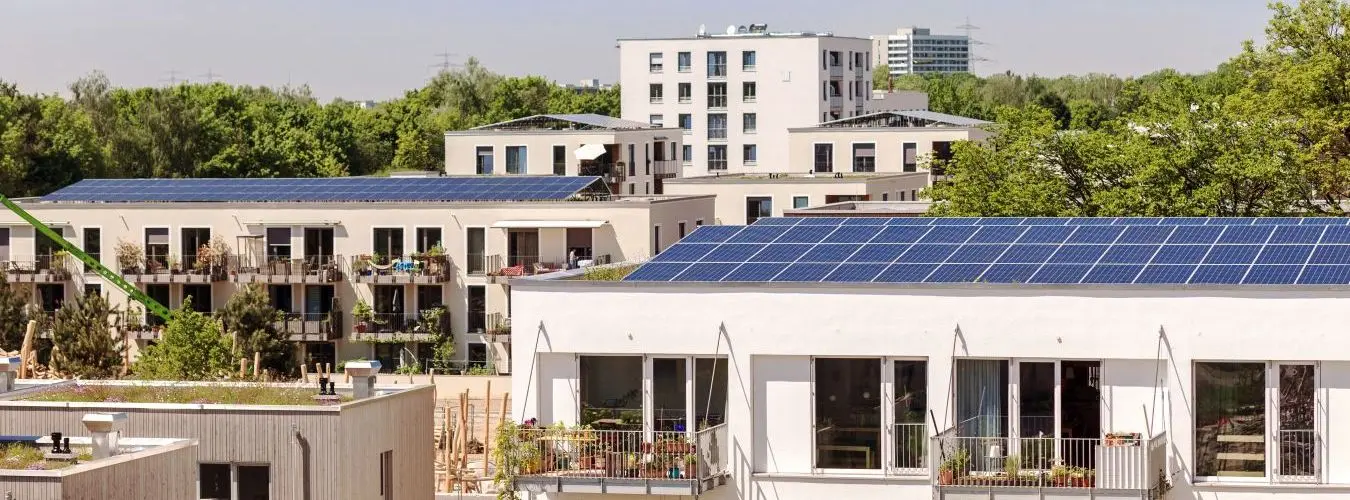
Energy efficiency is increasingly becoming one of the most important value drivers in the residential real estate market. While location and size remain key purchasing criteria, prospective buyers are focusing more and more on ongoing energy costs, the sustainability of heating systems, and potential investments in modernization. This trend is also clearly evident in the Berlin metropolitan area and in Berlin itself. The experts at VON POLL IMMOBILIEN analyzed the asking prices of residential properties1 by energy source2 in the first quarter of 2026 and examined the trends compared to the same period last year. Four energy source groups were examined: first, solar, air, water, and geothermal energy; second, district heating and electricity; third, gas and natural gas; and fourth, oil.

“The debate surrounding the Building Energy Act, future heat supply, and rising energy costs has brought the energy efficiency of real estate into sharper focus. Today, buyers are generally paying closer attention to renovation and modernization, as well as long-term cost-effectiveness. In the Berlin metropolitan area, there is now a clearer distinction between the various energy sources than there was just a few years ago. While modern heating systems are becoming more attractive in many places, potential modernization costs for older heating systems are increasingly factored into pricing. Ultimately, however, the combination of a property’s location, condition, and development potential remains the decisive factor.''
Renewable heating systems are seeing the highest increases in value
The strongest price increases in the Berlin metropolitan area are being seen in residential properties equipped with solar, air, water, or geothermal heating. Potsdam leads the way with an average increase of 13.3 percent in the first quarter of 2026 compared to the same period last year, reaching an average of 6,466 €/m². It is followed by Havelland, with an increase of 10.8 percent to 4,261 €/m²; Potsdam-Mittelmark, with 10.3 percent to 4,111 €/m²; Oder-Spree, with 9.9 percent to 3,706 €/m²; Barnim, up 8.8 percent to €3,889 per square meter; Dahme-Spreewald, up 8.5 percent to €3,789 per square meter; and Oberhavel, up 2.3 percent to €3,764 per square meter.
Only Teltow-Fläming and Märkisch-Oderland recorded price declines in this segment, down 5.2 percent to €3,435 per square meter and 3 percent to €3,502 per square meter, respectively.
Berlin itself has an average price level of 6,559 €/m² for properties with renewable heating systems. Compared to the first quarter of 2025, this represents an increase of 10.4 percent. As a result, the capital continues to be significantly ahead of all surrounding regions in terms of price.
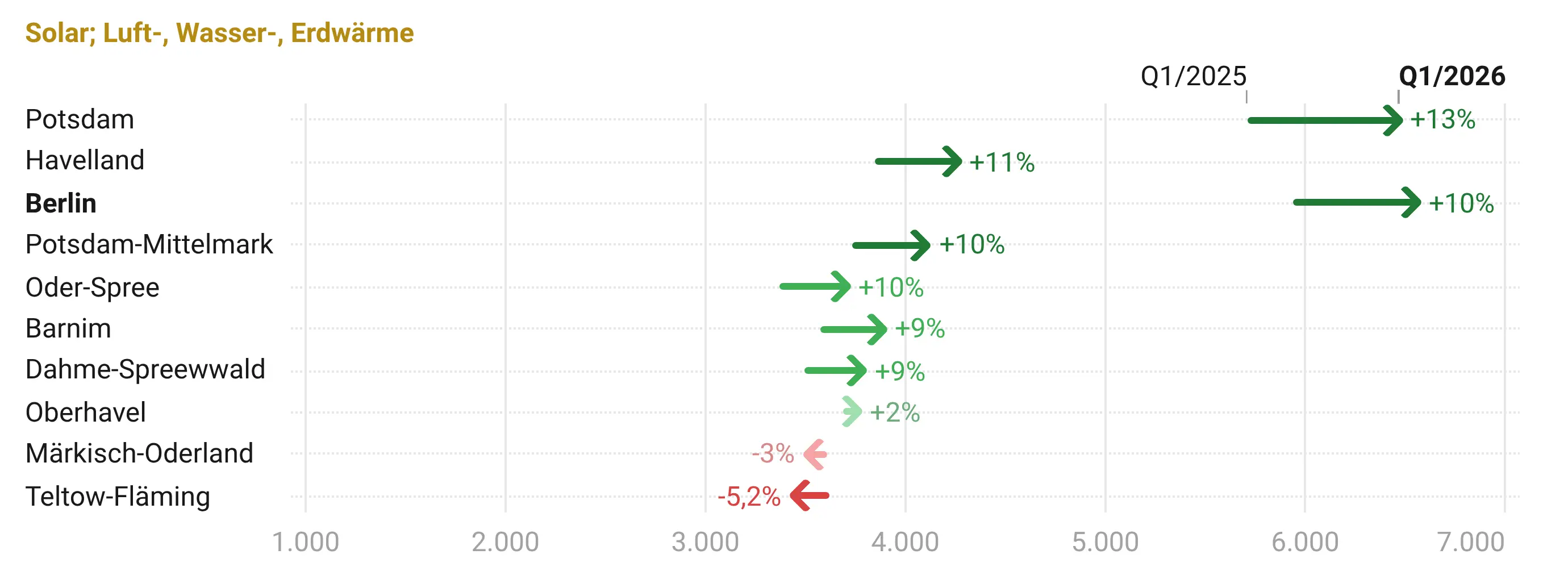
Fig. 1: Price trends for residential properties with solar, air, water, or geothermal heating in Berlin and the surrounding area in the first quarter of 2026

“Good energy efficiency clearly has a positive impact on demand today. Nevertheless, location remains the most important criterion for most prospective buyers. However, when several comparable properties are available, many buyers are increasingly opting for the property with the higher energy efficiency rating. The extent to which the type of heating system influences the purchase decision often depends on the specific buyer group. At the same time, we’re observing that many prospective buyers are specifically asking about retrofitting options and are increasingly using older heating systems as a bargaining chip in price negotiations. Uncertainties exist primarily with oil and gas heating systems that have lower energy efficiency ratings, while properties with a modern energy efficiency standard are usually much easier for buyers to budget for.''
Dynamic Growth in District Heating and Electricity
The segment of district heating- and electricity-based properties saw even more dynamic growth. Märkisch-Oderland recorded the highest price increase for properties using these energy sources, at 14.7 percent to 3,927 €/m²—followed by Potsdam at 12.2 percent (5,920 €/m²), Havelland at 10.6 percent (€3,904/m²), Oder-Spree at 10.6 percent (€3,945/m²), and Oberhavel at 8.1 percent (€3,787/m²).
In Teltow-Fläming, prices for properties with district heating or electric heating systems also rose by 3.5 percent to 3,924 €/m², and in Dahme-Spreewald by 1.2 percent to 4,046 €/m². Price declines were recorded only in Barnim, down 4.4 percent (€3,506/m²), and Potsdam-Mittelmark, down 1.2 percent (€3,815/m²).
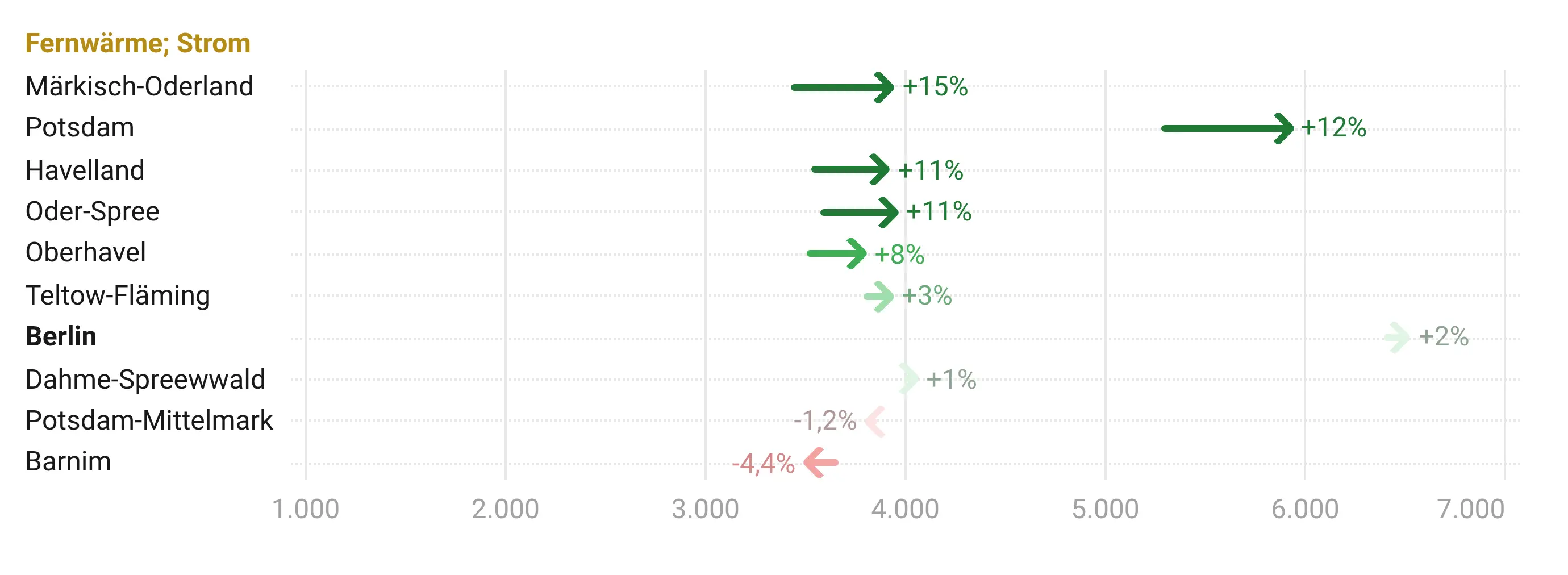
Fig. 2: Price trends for residential properties with district heating and electricity in Berlin and the surrounding area in the first quarter of 2026

“The type of heating system and energy efficiency play a significantly greater role for prospective buyers today than they did a few years ago. Many customers pay very close attention to energy costs and the potential follow-up costs of energy-efficiency upgrades. In some regions in particular, there is the added challenge that it is not always easy to find qualified contractors to carry out the work promptly. Renewable heating systems are generally viewed positively, and traditional gas heating is not yet a major obstacle for most prospective buyers. When it comes to oil-fired heating systems, however, there is significantly more hesitation. Issues such as the Building Energy Act, potential retrofit costs, and future energy costs also have a noticeable influence on purchasing decisions and price negotiations today.”
When compared to the surrounding areas, Berlin continues to command the highest price level in this segment, averaging 6,509 €/m². Compared to the same period last year, asking prices rose by 1.8 percent in the first quarter of 2026. Across the entire Berlin metropolitan area, the growth is even slightly stronger: Here, prices for residential properties with district heating or electric heating rose by an average of 4.9 percent to 4,247 €/m².
Mixed Picture for Properties with Gas Heating
The trend for residential properties with gas heating is significantly more varied. The strongest price increases in the first quarter of 2026 were recorded in Dahme-Spreewald, with a 6.1 percent rise to €3,574/m², followed by the Oder-Spree district with a 2.5 percent increase to €3,076/m², Barnim at 2.2 percent to 3,346 €/m², and Havelland at 1.4 percent to 3,903 €/m².
In several regions, however, prices for residential properties with gas heating remained virtually flat. Märkisch-Oderland, up 0.9 percent to €3,227 per square meter, and Teltow-Fläming, up 0.5 percent to €3,138 per square meter, recorded only moderate changes. In contrast, properties with gas heating in Oberhavel are under pressure, having fallen by an average of -7.5 percent to €3,460 per square meter compared to the same period last year. In Potsdam as well, real estate prices in this segment fell by an average of -3.1 percent to 5,129 €/m² in the first quarter of 2026, in Berlin by -1.2 percent to €5,290 per square meter, and in Potsdam-Mittelmark by -1.1 percent to €4,069 per square meter.
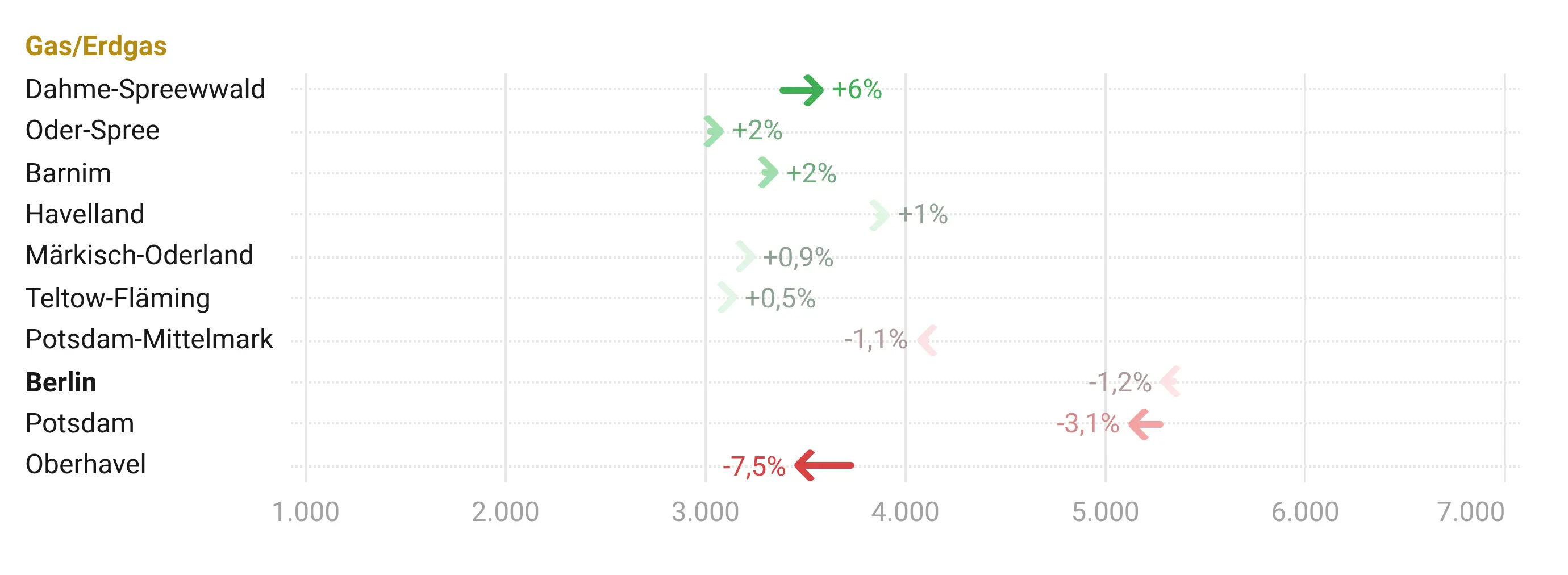
Fig. 3: Price trends for residential properties with gas/natural gas heating in Berlin and the surrounding area in the first quarter of 2026

“Gas heating systems are still acceptable to many buyers, whereas there is significantly more hesitation when it comes to oil heating systems. Anyone interested in a house with an oil-fired heating system has usually already considered switching to gas or a heat pump at a later date. The associated costs are often factored into price negotiations. Homes with very good energy efficiency ratings, such as A+ or A, also often benefit from better financing terms and tend to fall toward the upper end of the price range in our evaluations. Overall, real estate buyers today have become significantly more sensitive to energy savings and efficiency. Ultimately, however, the deciding factor remains the overall package of location, condition, and the total scope of renovation and modernization work required. In general, we see many buyers in Brandenburg who take a very pragmatic approach to renovations and even carry out some of the work themselves.''
Properties with oil-fired heating systems are losing value almost everywhere
Residential properties with oil-fired heating systems continue to show the weakest performance. Asking prices fell particularly sharply in Märkisch-Oderland. There, prices dropped by -12.7 percent to an average of 1,670 €/m². This was followed by Oder-Spree, down -10.9 percent to 1,650 €/m², Potsdam at -9.4 percent to 4,920 €/m², Oberhavel at -7.1 percent to 3,092 €/m², and Dahme-Spreewald at -5.2 percent to 1,940 €/m². Similarly, in Barnim, prices fell by 3.6 percent to 2,507 €/m², in Teltow-Fläming, down 2 percent to €2,626 per square meter, and in Potsdam-Mittelmark, down 1.4 percent to €2,351 per square meter, prices for properties with oil heating declined in the first quarter of 2026.
Positive trends remain the exception. Only Havelland recorded a noticeable increase of 2.1 percent to 2,639 €/m². Berlin also showed a slight positive trend, rising 1.4 percent to 4,849 €/m².
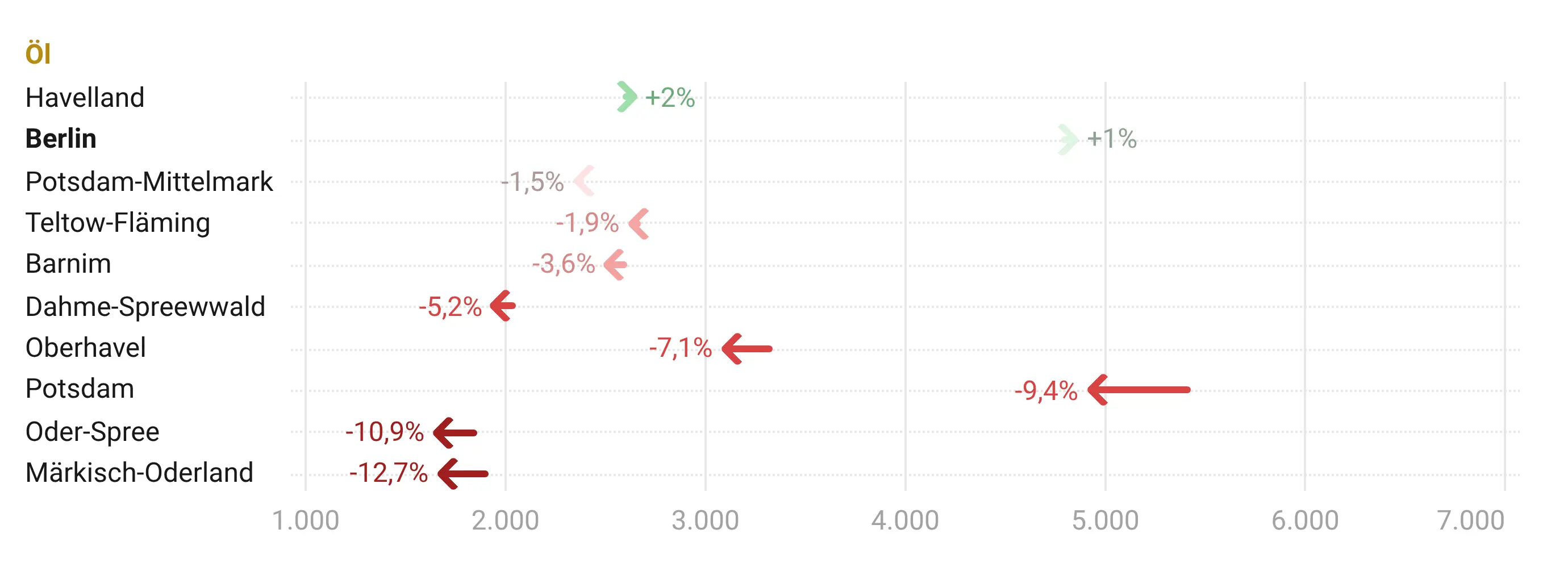
Fig. 4: Price trends for residential properties with oil heating in Berlin and the surrounding area in the first quarter of 2026

“Topics such as the Building Energy Act, modernization requirements, and future energy costs have now become a regular part of nearly every consultation. Buyers today do significantly more research than they did a few years ago and want to be able to assess early on what investments they might face after the purchase. When it comes to gas heating systems, we’re seeing an increasing number of questions about the future trend of energy costs as well as possible conversion options. Properties with modern heat pump systems—ideally combined with a photovoltaic system—are currently in particularly high demand. District heating also continues to be viewed positively, especially in Berlin’s housing market, as many prospective buyers value the reliability of supply and the comparatively low maintenance requirements. Regardless of the type of heating system, however, a good location in Berlin and the surrounding area remains one of the most important factors in the decision to buy.''
Conclusion: Berlin versus the Surrounding Area
Across all energy sources, Berlin remains the most expensive market in the analysis. At the same time, the surrounding areas of Berlin are showing increasing differentiation in price trends based on heating systems: While properties with modern energy sources are seeing significant increases in value in many areas, properties with oil heating in particular are coming under pressure in several regions. The results illustrate that energy efficiency and heating technology are increasingly being taken into account in purchasing decisions. Nevertheless, location, condition, and the degree of modernization will continue to be the decisive factors for a property’s long-term market value.
Fig. 5: Residential real estate price trends by energy source in Berlin and the surrounding area in the first quarter of 2026 (Graphic: von Poll Immobilien GmbH)
All data and charts may be used and published with a reference to the following source: VON POLL IMMOBILIEN
The interactive charts can be downloaded here with an embed link:
1 The data used for the purchase price analysis is based on the average listing prices for condominiums and single- and two-family homes in Berlin and the surrounding area (all adjacent cities and counties) from GeoMap for the first quarter of 2026 compared to the first quarter of 2025, as well as adjustments made by VON POLL IMMOBILIEN Research (2026).
2 As part of the analysis, energy sources were grouped into the following heating types: first, solar, air, water, and geothermal heating; second, district heating and electricity; third, gas and natural gas; and fourth, oil. Wood/pellets were also included in the analysis but, due to the small number of offers, are not representative and are not listed.