In Germany’s eight top cities, it is becoming increasingly clear that residential real estate prices are determined not only by location and condition, but also by the type of heating system. Modern heating systems are providing an additional boost to real estate in many markets, while traditional heating methods are valued very differently depending on the city and market segment. One thing is particularly clear: price trends by energy source are by no means uniform across these major cities.
The experts at VON POLL IMMOBILIEN analyzed the asking prices of residential properties¹ by energy source² in the first quarter of 2026 in the eight German A-cities—Berlin, Düsseldorf, Frankfurt am Main, Hamburg, Cologne, Leipzig, Munich, and Stuttgart—and examined how they compared to the same period the previous year. The analysis focused on four energy source groups: first, solar, air, water, and geothermal energy; second, district heating and electricity; third, gas and natural gas; and fourth, oil.

“In the residential real estate market, we are seeing increasing differentiation based on energy sources. While the type of heating system does not, in and of itself, directly influence price trends, it is becoming an additional factor in property valuation in many markets. Particularly in Germany’s largest cities, modern heating systems are increasing market appeal in many areas and are often accompanied by more dynamic price trends. However, the differences between major cities also make it clear that market trends cannot be applied on a one-to-one basis. What leads to above-average price trends in one city—or in one neighborhood within that city—may have significantly less impact in another market. Therefore, the overall package of location, condition, energy efficiency, and development potential always remains decisive for a property’s market position.''
Renewable heating systems lead the price trend
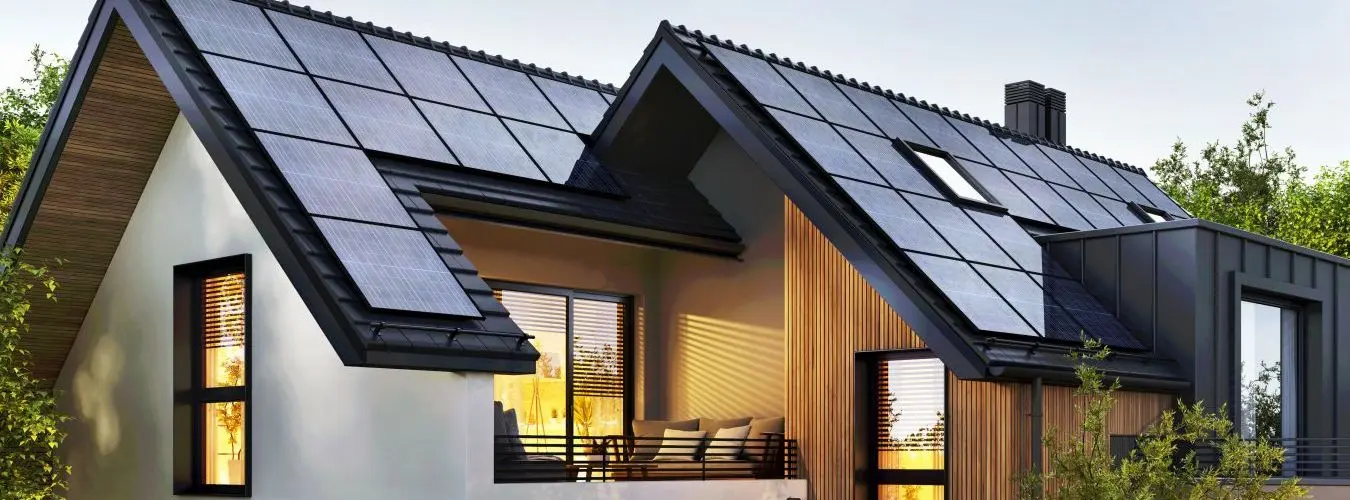
Residential properties equipped with solar, air, water, or geothermal heating. Berlin leads the way with an average increase of 10.4 percent to €6,559/m² in the first quarter of 2026 compared to the same period the previous year. It is followed by Düsseldorf with a 9.2 percent increase to €7,311/m², Frankfurt am Main with a 6.6 percent increase to €7,461/m², and Hamburg with a 4.8 percent increase to €6,569/m².
Prices for properties equipped with renewable energy sources are rising at a more moderate pace in Cologne, up 1.5 percent to €6,771 per square meter, Stuttgart, up 1.2 percent to €7,625 per square meter, and Munich, up 0.9 percent to €10,091 per square meter. Leipzig recorded the lowest price increase among the A-class cities, at 0.4 percent to €4,800 per square meter.
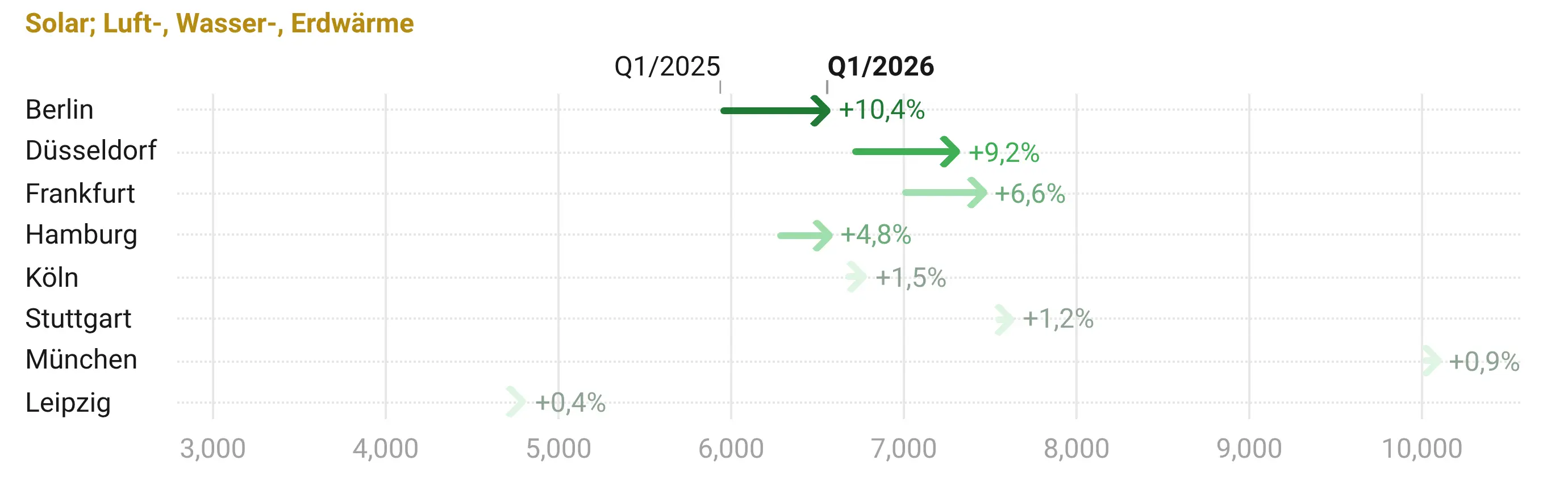
Fig. 1: Price trends for residential properties with solar, air, water, or geothermal heating in German Tier-A cities in the first quarter of 2026

“A few years ago, location, size, and condition were almost the only factors determining the price. Today, questions about heating and the energy performance certificate are among the first to be asked—often even before a viewing. In Cologne —especially in the housing stock on the right bank of the Rhine, which includes many properties from the ’60s and ’70s—we see that energy-efficient homes sell significantly faster, while properties in need of renovation require longer marketing times and noticeable price concessions. Especially when it comes to gas and oil heating systems, many prospective buyers now factor in a renovation reserve from the outset and incorporate the requirements of the Building Energy Act—such as the stipulation that new heating systems must be powered by at least 65 percent renewable energy—directly into their asking price. Properties with heat pumps or district heating connections therefore appeal to a broader pool of buyers. In Cologne, the market has recently stabilized again and has turned slightly positive following the correction of previous years—but this recovery is driven primarily by energy-efficient properties.''
District heating and electricity see sharp price increases in Düsseldorf and Hamburg
Residential properties with district heating or electricity are also showing positive price trends in many locations. The highest increases were recorded in Düsseldorf, with an average of 8.7 percent to 6,856 €/m², and Hamburg, with 7.7 percent to 8,029 €/m². These are followed by Cologne, with 2.5 percent to 5,735 €/m², Frankfurt am Main and Berlin, each up 1.8 percent to €7,477/m² and €6,509/m², respectively, as well as Stuttgart, up 1.4 percent to €5,855/m², showing a comparatively moderate upward trend.
Munich continues to have the highest price level in this segment at €9,544 per square meter, but remains relatively stable at 0.5 percent. Leipzig, with a decline of -1 percent to €3,901/m², is the only Class A city where prices for residential properties heated by district heating or electricity are falling slightly.
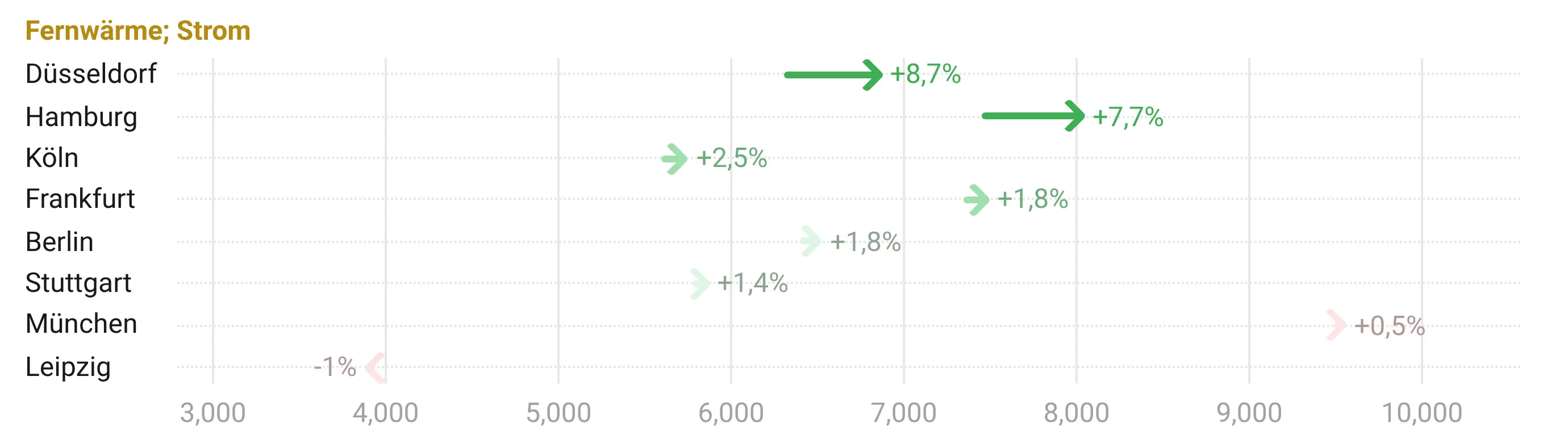
Fig. 2: Price trends for residential properties with district heating and electricity in German A-class cities in the first quarter of 2026

“Rising energy costs, geopolitical factors, and the Building Energy Efficiency Act have permanently changed buyer behavior. Energy efficiency is now a key purchasing criterion in many cases. Buyers are now specifically asking about energy performance certificates and heating systems. This awareness has noticeably increased in recent years. This means that well-renovated properties or those with modern building systems are sold more quickly and at significantly better prices. At first glance, heat pumps or district heating are real selling points. We’re seeing a clearly higher level of interest in properties with future-proof heating systems. Properties with gas or oil heating continue to sell well—but only with an honest assessment of the expected modernization costs. This is because buyers who are consciously investing in existing properties now factor in renovation needs more realistically than they did a few years ago—well-informed advice and the right partners are crucial in this regard.''
Mixed Picture for Gas Heating Systems
The trend for residential properties with gas or natural gas heating varies across major cities. Düsseldorf recorded the strongest price increase, averaging 4.4 percent to €4,694/m². It is followed by Leipzig with 2.4 percent to €2,955/m² and Cologne with 2.3 percent to €4,730/m².
In Munich, prices for properties with gas heating have remained virtually flat, rising by 0.2 percent to 8,219 €/m². The same applies to Frankfurt am Main, which saw a decline of 0.4 percent to 5,923 €/m², and Stuttgart, which saw a decline of 0.9 percent to 4,560 €/m². By contrast, slight declines were seen in Berlin, down 1.2 percent to 5,290 €/m², and Hamburg, down 1.5 percent to 5,176 €/m².
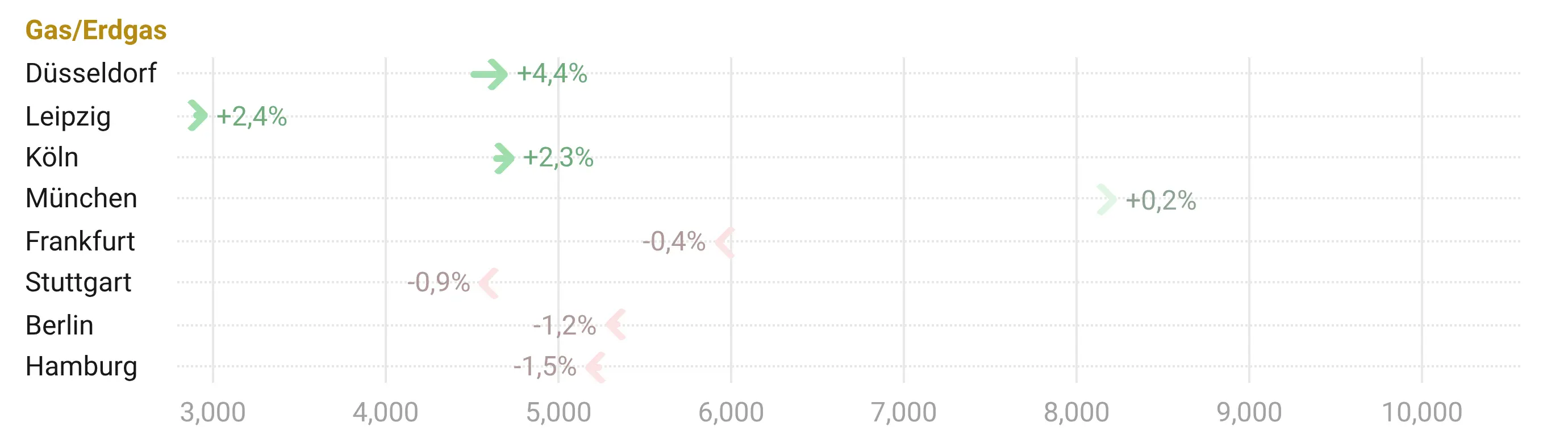
Fig. 3: Price trends for residential properties with gas/natural gas heating in German Tier-A cities in the first quarter of 2026
Oil-Fired Heating Systems Show Surprisingly Stable Prices
Contrary to what is often expected, there is no uniform downward trend for residential properties with oil-fired heating systems in the eight A-class cities. The highest price increases were recorded in Düsseldorf, with an average of 2.8 percent to €4,336/m²; Leipzig, with 2.3 percent to €2,966/m²; and Berlin, with 1.4 percent to €4,849/m².
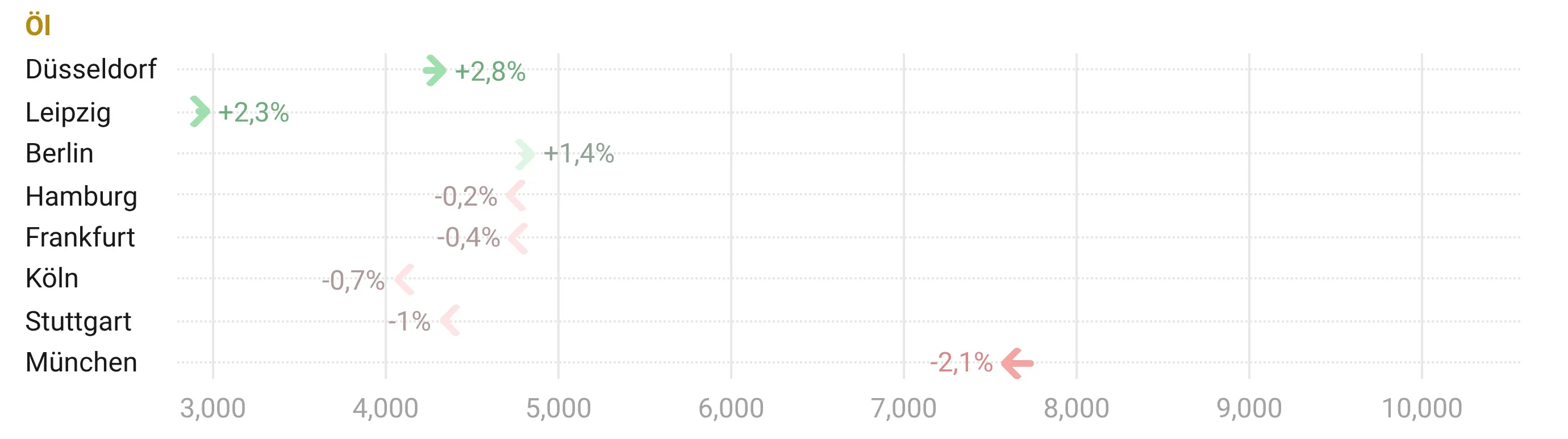
Fig. 4: Price trends for residential properties with oil heating in German A-class cities in the first quarter of 2026
In contrast, prices for properties with oil heating are trending more or less sideways in Hamburg, down 0.2 percent to 4,718 €/m², in Frankfurt am Main, down 0.4 percent to €4,734/m²; in Cologne, down 0.7 percent to €4,066/m²; and in Stuttgart, down 1 percent to €4,331/m². Munich recorded the sharpest price decline among the A-cities, down 2.1 percent to 7,587 €/m².

“The energy efficiency of a property definitely plays a more significant role today than it did a few years ago. In particular, the prospect of future costs is important to many prospective buyers when purchasing a property. While issues such as the Building Energy Act, energy-efficient retrofitting, and future energy costs were previously viewed as secondary considerations, they are now clearly a focus for prospective buyers and have become an extremely important purchasing criterion. Leipzig scores well here with a comparatively energy-efficient housing stock—the proportion of residential properties on the market with poor energy efficiency ratings is among the lowest nationwide. Accordingly, the renovation backlog in Leipzig is significantly lower.''
Fig. 5: Residential real estate price trends by energy source in German A-cities in the first quarter of 2026 (Graphic: von Poll Immobilien GmbH)
All data and charts may be used and published with a reference to the following source: VON POLL IMMOBILIEN (www.von-poll.com)
The interactive charts can be downloaded here with an embed link:
1 The data underlying the purchase price analysis is based on the average asking prices for condominiums and single- and two-family homes in the eight German A-cities—Berlin, Düsseldorf, Frankfurt am Main, Hamburg, Cologne, Leipzig, Munich, and Stuttgart—compiled by GeoMap for the first quarter of 2026 compared to the first quarter of 2025, with adjustments made by VON POLL IMMOBILIEN Research (2026).
2 As part of the analysis, energy sources were grouped into the following heating types: first, solar, air, water, and geothermal heating; second, district heating and electricity; third, gas and natural gas; and fourth, oil. Wood/pellets were also included in the analysis but, due to the small number of offers, are not representative and are not listed.