Summers in Germany are getting hotter—temperatures above 30 degrees are no longer an exception. Attic apartments and buildings with large window areas, in particular, heat up quickly and can significantly impair living comfort. But air conditioning isn’t always the best—or even the most cost-effective—solution. After all, there’s a growing awareness that properties should not only be energy-efficient but also climate-resilient.
The experts at VON POLL IMMOBILIEN show how heat buildup in living spaces can be significantly reduced with a few targeted measures—even without air conditioning—and which investments can be worthwhile for the property’s value appreciation.
Key Points at a Glance
- External sun protection (roller shutters, external blinds, awnings) blocks heat before it enters the room—especially on the south and west sides.
- Early in the morning and late in the evening, cross-ventilate; keep windows and shading closed during the day.
- Green facades and roofs provide sustainable cooling and improve the microclimate.
- Good insulation and energy efficiency have a dual effect—in both summer and winter.
- Climate resilience is becoming a quality and value factor in real estate sales.
“When it comes to the quality of a residential property, it’s no longer just traditional factors such as location, amenities, condition, or energy efficiency that matter. Equally important is how well a building maintains a consistently comfortable indoor climate even on hot summer days. Measures to combat summer overheating are therefore no longer merely comfort solutions—they make an important contribution to ensuring a property’s long-term value. Owners should therefore not view such investments in isolation: They improve living comfort, can reduce energy consumption for cooling, and at the same time help adapt a property to changing requirements over the long term and support the preservation of its value.'
— Beata von Poll, Member of the Executive Board at VON POLL IMMOBILIEN
Cooling an Apartment Without Air Conditioning—An Overview of the Most Effective Measures
If you want to keep your apartment or house cool without air conditioning, it’s best to combine several measures. Five strategies are particularly effective:
- External sun protection
- Proper ventilation at the right time of day
- Green facades and roofs
- Insulation and energy efficiency
- Smart, sensor-controlled shading
Exterior sun protection: Blocking heat before it reaches the window
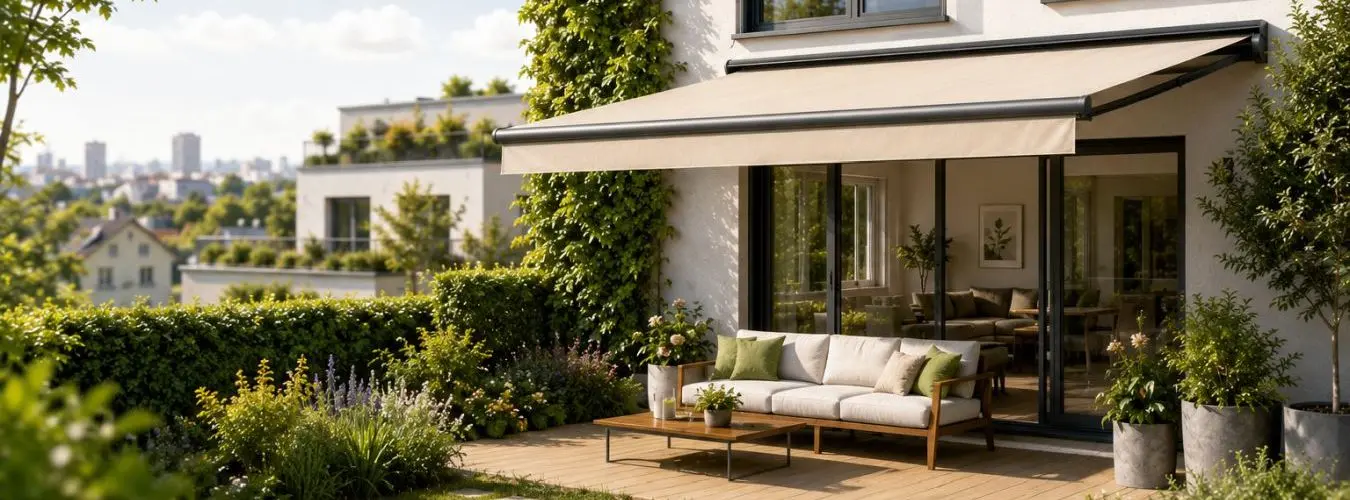
The most effective protection against summer heat begins right outside the window. Rollershutters, exterior blinds, or awnings prevent the sun’s rays from hitting the window panes directly and causing the rooms to heat up. Unlike interior blinds or curtains, exterior shading systems block a large portion of the sun’s rays before they hit the glass. They’re especially worthwhile on south- and west-facing sides, as these facades are exposed to particularly intense sunlight during the hottest part of the day. If you consistently use shading during the day and close the roller shutters in a timely manner, you’ll significantly lower the room temperature while also protecting furniture and flooring from fading.
Ventilating Properly and Keeping Your Home Cool—The Right Time
In addition to effective shading, proper ventilation practices also determine how much living spaces heat up in the summer. It is recommended to ventilate thoroughly early in the morning and late in the evening, when outdoor temperatures are significantly lower than inside the building, and to create cross-ventilation whenever possible. However, as soon as outdoor temperatures rise, windows should remain closed. Together with lowered roller shutters or awnings, this prevents hot air and sunlight from entering living spaces. In contrast, leaving windows tilted open for extended periods during midday hours has the opposite effect and contributes to the interior heating up even more.
Green facades and roofs: natural cooling for buildings
Plants also play an important role in heat protection. Trees, climbing plants, and green facades or roofs provide shade and sustainably cool their surroundings. Green facades and roofs, in particular, are becoming increasingly important. They protect building components from direct sunlight, reduce temperature fluctuations, and simultaneously improve the microclimate around the building. In addition, green outdoor areas enhance the quality of life and help improve air quality. Especially in densely built-up residential areas of large cities and metropolitan regions, they create a more pleasant living environment and increase the property’s appeal.
Insulation & Energy Efficiency: Cooling Attics and Homes Without Air Conditioning
Older existing buildings, in particular, often offer potential for energy-efficiency improvements. Modern insulation of the roof and facade is not only energy-efficient but also prevents buildings—and especially attic apartments—from overheating. Energy efficiency offers two advantages: Owners benefit from a more comfortable indoor climate in both summer and winter. Furthermore, such measures are becoming increasingly important, as a property’s climate resilience is increasingly becoming a decisive quality criterion for prospective buyers. Investments in insulation or modern windows therefore not only contribute to living comfort and energy efficiency but can also increase a property’s value in the long term and improve its marketability.
Smart Home Heat Protection: Automatically Control Shading
Similarly, modern smart home solutions can help reduce heat buildup in living spaces early on. Automatically controlled roller shutters or awnings use sun and temperature sensors to respond to current weather conditions and ensure that rooms do not overheat in the first place. Another advantage: Smart home systems allow for on-demand control of shading and ventilation—even when you’re away. Intelligent home automation thus enhances living comfort while also highlighting a property’s modern standard of amenities.
Frequently Asked Questions (FAQ)
How do I cool my apartment without air conditioning?
The most effective approach is a combination of exterior sun protection (roller shutters, exterior blinds, awnings), consistent cross-ventilation early in the morning and late in the evening, keeping windows closed during the day, and good insulation. Greenery and sensor-controlled shading can also help.
What helps combat heat in an attic apartment?
Attic apartments heat up particularly quickly. Good roof insulation, exterior sunshades on skylights, and proper ventilation practices are crucial. This keeps the room noticeably cooler even without air conditioning.
What does summer heat protection mean?
Summer heat protection encompasses all structural and organizational measures that prevent indoor spaces from overheating in the summer—from shading and insulation to glazing and ventilation practices. It complements winter thermal protection.
Does heat protection increase a property’s value?
Increasingly, yes. Climate resilience is becoming more important to prospective buyers. Measures such as insulation, modern windows, and shading improve living comfort and energy efficiency and can increase value and marketability in the long term.
Conclusion: Summer heat protection ensures living comfort and property value
With targeted measures, apartments and houses can be kept significantly cooler even without air conditioning—and those who invest early not only improve the indoor climate but also the property’s long-term value retention.
“We’re seeing that prospective buyers today evaluate residential properties in a much more holistic way than they did just a few years ago. Although summer heat protection is rarely explicitly mentioned as a search criterion, during viewings, it is playing an increasingly important role—specifically, how comfortable a property is to live in even on hot days and how well it is prepared for prolonged heat waves. Given rising temperatures, this aspect is likely to become even more important in the future. Owners who prepare their properties for this trend early on therefore not only improve the quality of living but also create favorable conditions for long-term value preservation and successful marketing.”
— Beata von Poll, Member of the Executive Board at VON POLL IMMOBILIEN
How does heat protection affect the value of your property?
Whether it’s insulation, shading, or energy-efficient upgrades—we’ll assess which measures are worth it for your property and determine its current market value. Free of charge and with no obligation.