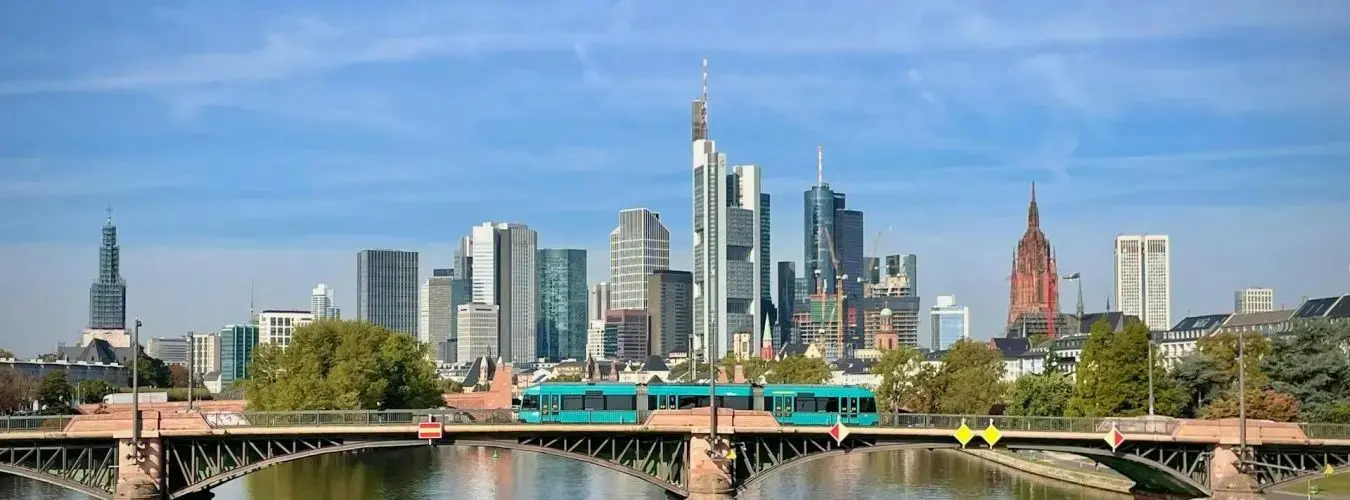
Frankfurt am Main is much more than just Germany’s well-known banking hub. With its historic half-timbered houses, impressive skyscrapers, world-famous museums, and lush parks, the city offers extraordinary diversity. Anyone looking for the best places to visit in Frankfurt am Main will discover a city where centuries-old history and modern architecture come face to face.
Unlike many historic cities in Hesse, Frankfurt particularly impresses with its contrasts: On the Römerberg, medieval structures evoke its past as a coronation city, while just a few minutes’ walk away, the striking skyline dominates the cityscape. We present the top 10 places to visit in Frankfurt—with historical background, practical sightseeing tips, and recommendations for unique perspectives on the metropolis on the Main.
Key Facts at a Glance
- Frankfurt’s most famous sights are the Römerberg, the New Old Town, the Imperial Cathedral, and the impressive skyline.
- Many historical highlights are centrally located and can be easily explored on a stroll.
- The Main Tower offers a spectacular panoramic view of Frankfurt and the Rhine-Main region.
- With the Museumsufer, the Palmengarten, and the zoo, Frankfurt is also a great destination for culture lovers and families.
- For Frankfurt sightseeing on a first visit, we recommend spending at least one to two days to get to know the city’s many different facets.
Contents
- Römerberg and City Hall
- Frankfurt’s New Old Town
- Imperial Cathedral of St. Bartholomew
- Main Tower and Skyline
- St. Paul’s Church
- Museumsufer and Städel Museum
- Eiserner Steg
- Alte Oper
- Palmengarten
- Frankfurt Zoo
- Top 10 at a Glance
- Frequently Asked Questions
- How to Get to Frankfurt
- Frankfurt as a Place to Live
- Conclusion
- VON POLL IMMOBILIEN Frankfurt
1. Römerberg – the historic heart of Frankfurt
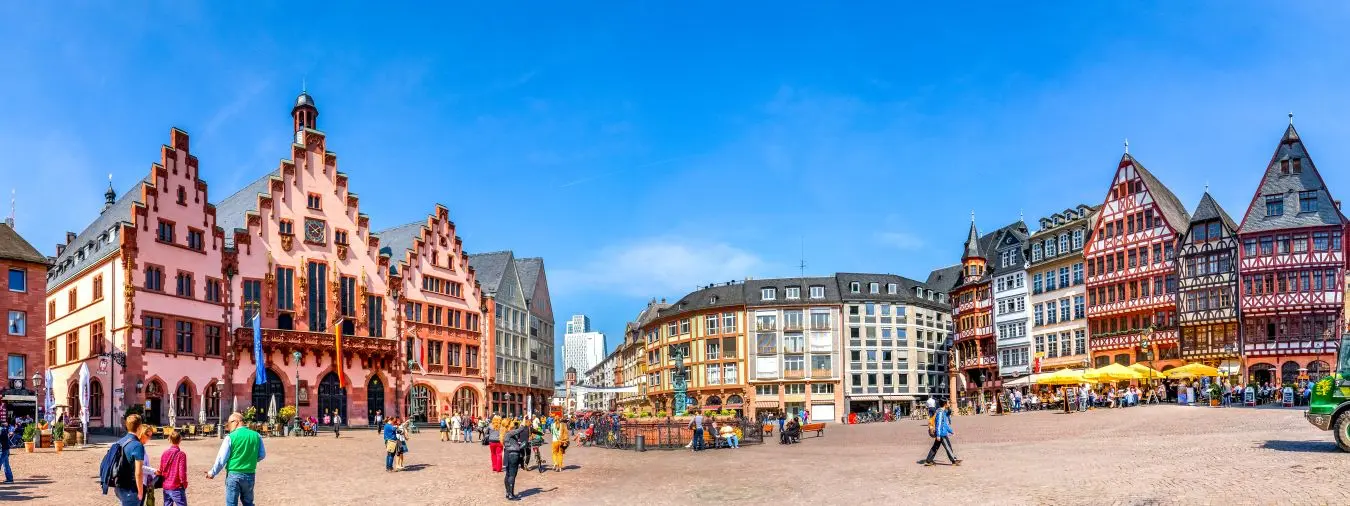
The Römerberg is the historic center of Frankfurt and one of the city’s most famous landmarks. As early as the Middle Ages, markets, fairs, and major public events took place here. A particularly striking feature is the Römer, the city hall of Frankfurt am Main, which has served as the seat of the city administration since 1405. Its distinctive facade with its three stepped gables is one of the most photographed sights in the Main metropolis.
On the opposite side of the square lies the so-called Ostzeile with its reconstructed half-timbered houses. The Fountain of Justice and the Old St. Nicholas Church complete the historic ensemble. The Römerberg transforms into an atmospheric setting, especially during the Frankfurt Christmas Market. But even outside the Advent season, the square is an ideal starting point for Frankfurt sightseeing in the city center.
- Highlight: The famous town hall façade with the Kaisersaal, a historic interior.
- Architecture: Reconstructed half-timbered houses on the Ostzeile and the Old St. Nicholas Church.
- Insider Tip: Visit the Römerberg early in the morning. At that time, the square is often still pleasantly quiet and offers particularly beautiful photo opportunities.
📍 Address: Römerberg, 60311 Frankfurt am Main
🕐 Hours: The public square is freely accessible at all times.
💶 Admission: Free; separate rules may apply to individual indoor areas.
2. Frankfurt’s New Old Town – Rediscover Historic Alleys
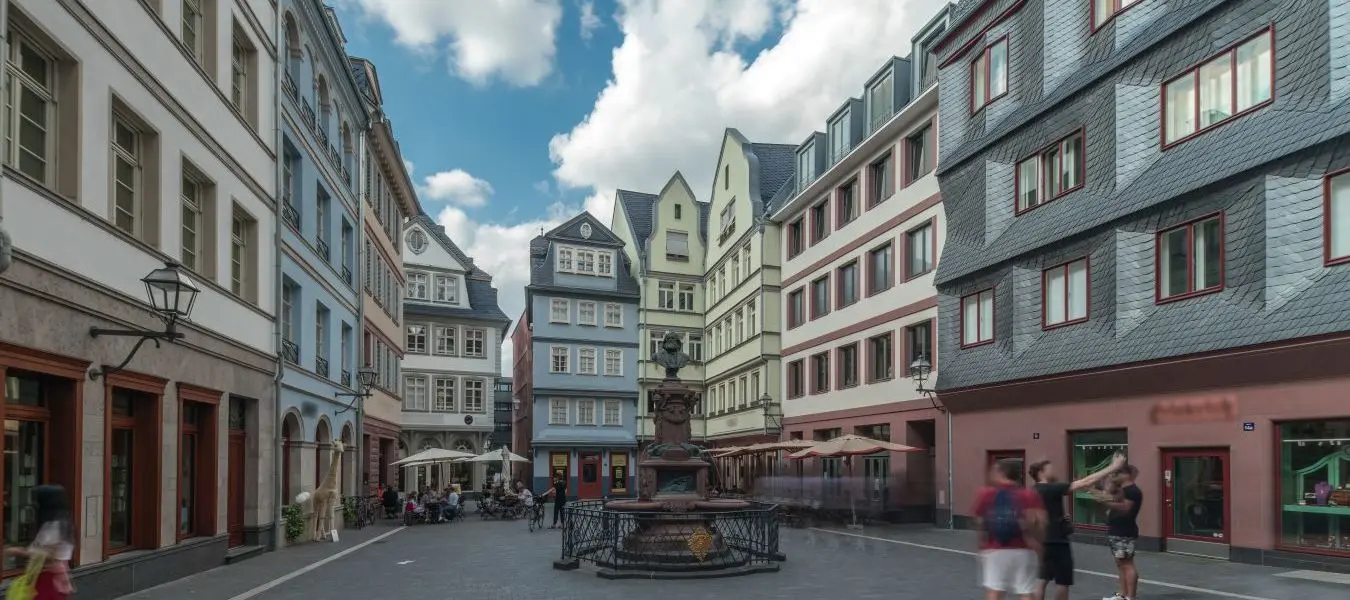
Frankfurt’s New Old Town combines historic reconstructions with contemporary architecture and is one of Germany’s most remarkable urban development projects. Opened in 2018, the Dom-Römer Quarter was built on the historic city layout between Römerberg and the Imperial Cathedral. In total, the complex comprises 35 buildings, including 15 reconstructions of historic houses and 20 new structures.
Particularly worth seeing are the magnificent Haus Zur Goldenen Waage, the Hühnermarkt, and the historic Coronation Route. The latter commemorates the ceremonial processions between the cathedral and the Römer. Narrow alleys, small shops, and restaurants lend the neighborhood a special atmosphere. The New Old Town impressively demonstrates how Frankfurt preserves its historical heritage while simultaneously creating new urban spaces.
- Highlight: The elaborately reconstructed Renaissance house “Zur Goldenen Waage.”
- Special feature: The combination of historic architecture and modern urban planning.
- Insider tip: Take a look into the courtyard of the “Goldenes Lämmchen.” This quiet spot is easily overlooked during a quick tour of the Old Town.
📍 Address: Cathedral-Römer District, between Römerberg and Domplatz
🕐 Hours: Public streets and squares are accessible at all times.
💶 Admission: Free.
3. Imperial Cathedral of St. Bartholomew – Frankfurt’s most significant church
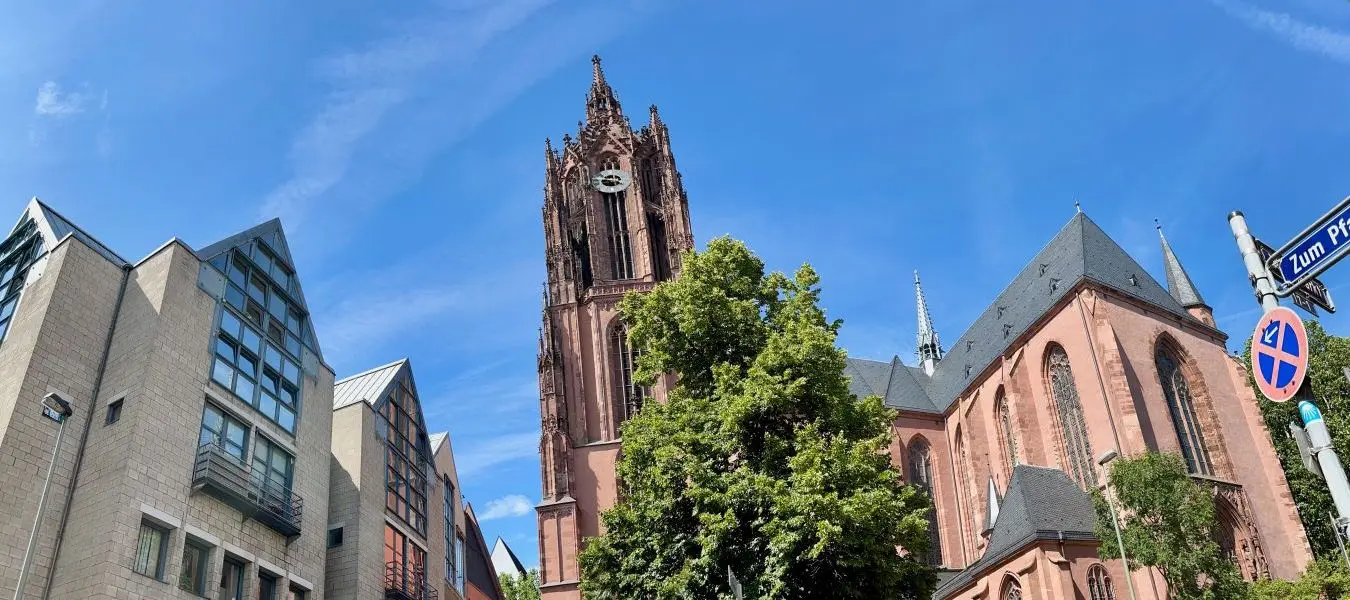
The Imperial Cathedral of St. Bartholomew is one of Frankfurt’s most important historical buildings. Although the church was never a bishop’s seat, it bears the name “Imperial Cathedral” due to its prominent role in the history of the Holy Roman Empire. Since the Golden Bull of 1356, Frankfurt has been a central location for royal elections. Between 1562 and 1792, numerous imperial coronations also took place in the cathedral.
This Gothic church impresses with its approximately 95-meter-high tower, its ornate vaults, and its historic interior. Those who climb the steps of the cathedral tower are rewarded with a spectacular view of the Old Town and Frankfurt’s skyscrapers. It is precisely the contrast between the medieval church tower and the modern skyline that makes this view unique.
- History: An important site for the election and coronation of German kings and emperors.
- Architecture: Gothic cathedral with a striking west tower.
- Insider Tip: The cathedral tower offers a different view than the Main Tower: Here, the historic old town lies right below you.
📍 Address: Domplatz 1, 60311 Frankfurt am Main
🕐 Hours: Varies depending on church services, events, and the season.
💶 Admission: Visiting the church is generally free; there is a fee to climb the tower.
4. Main Tower – A bird’s-eye view of Frankfurt’s skyline
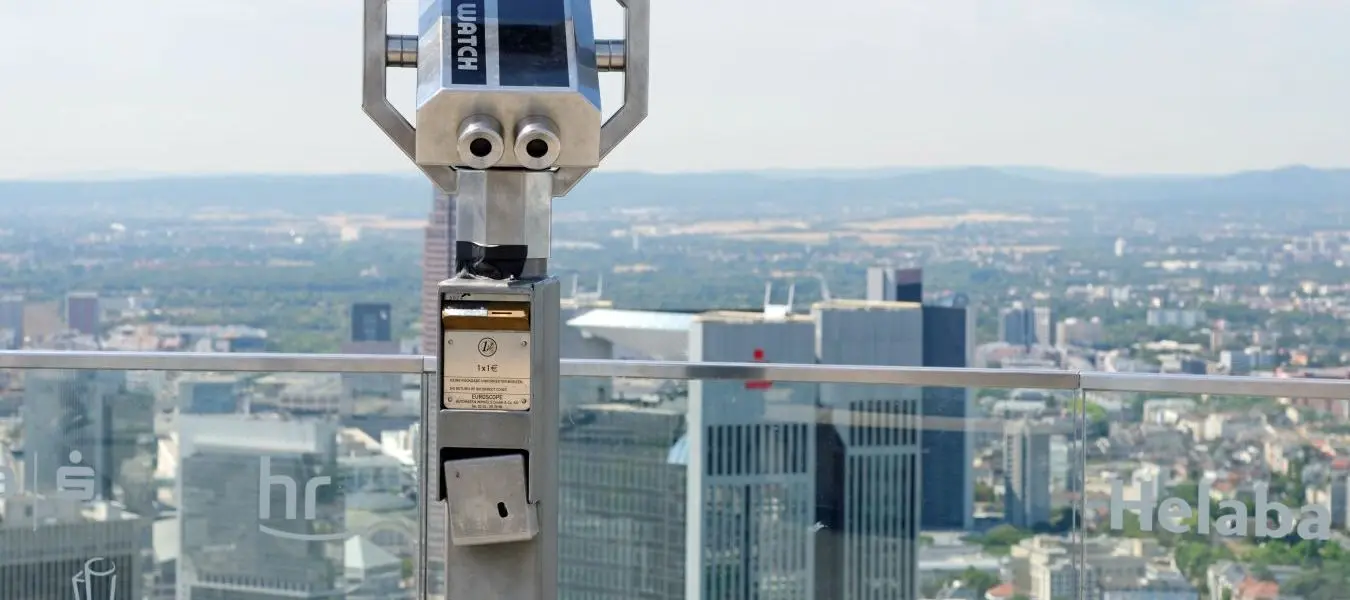
The Main Tower is one of the most spectacular landmarks in Frankfurt am Main and offers an impressive view of the city. The skyscraper, which is approximately 200 meters tall, was completed in 1999 and is one of the few high-rises in Frankfurt’s financial district to feature a publicly accessibleviewing platform.
From the platform, a panoramic view opens up over the high-rises of the financial district, the Main River, the Taunus Mountains, and—on a clear day—far into the Rhine-Main region. Particularly captivating is the view of the different architectural eras: While the historic city center consists of relatively low-rise buildings, modern towers such as the Commerzbank Tower and the high-rises of the financial district dominate the skyline. This skyline has also earned Frankfurt the nickname “Mainhattan.”
- Highlight: Publicly accessible observation deck at a height of approximately 200 meters.
- Special feature: Panoramic view of the skyline, the Main River, and the surrounding region.
- Insider Tip: If possible, plan your visit for late afternoon or dusk. That way, you’ll experience the transition from the daytime view to the illuminated skyline.
📍 Address: Neue Mainzer Straße 52–58, 60311 Frankfurt am Main
🕐 Hours: Vary by season and weather; check current hours in advance.
💶 Admission: Fee required; check the website for current prices.
🌐 Website: www.maintower.de
5. Paulskirche – How Did Frankfurt Become the Cradle of Democracy?
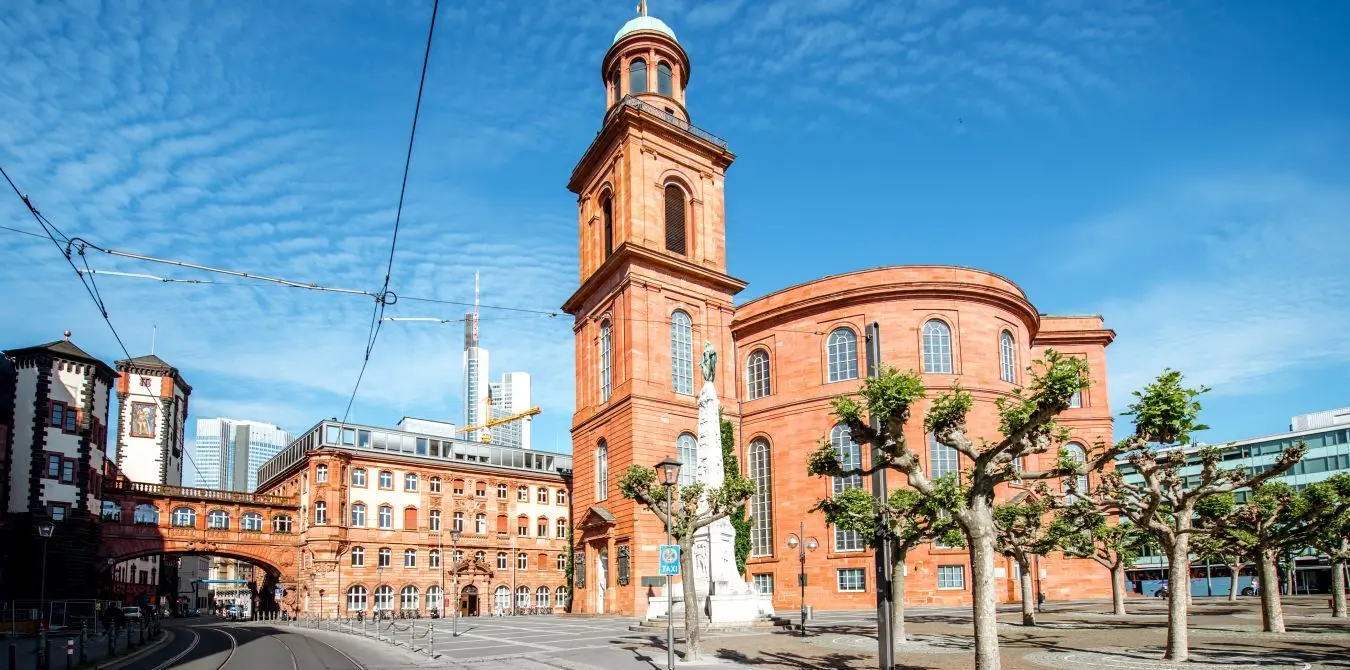
Frankfurt’s Paulskirche is considered one of the most significant symbols of German democratic history. On May 18, 1848, the first pan-German National Assembly convened here. The delegates drafted the Paulskirche Constitution, thereby laying important foundations for the development of parliamentary democracy in Germany.
Originally built as a Protestant church, the building was severely damaged during World War II and subsequently rebuilt. Today, St. Paul’s Church primarily serves as a memorial, exhibition space, and venue for events. Its simple interior design draws attention to the building’s historical significance. Especially for visitors interested in history, it is one of the must-see stops on a tour of Frankfurt.
- History: Venue of the National Assembly of 1848–49.
- Special feature: A nationally significant memorial site of German democracy.
- Insider tip: Combine your visit with a stroll across the neighboring Paulsplatz and the Römerberg.
📍 Address: Paulsplatz 11, 60311 Frankfurt am Main
🕐 Hours: Visiting hours may be limited due to events.
💶 Admission: Regular admission is free.
6. Museumsufer and Städel Museum – Art and Culture on the Main
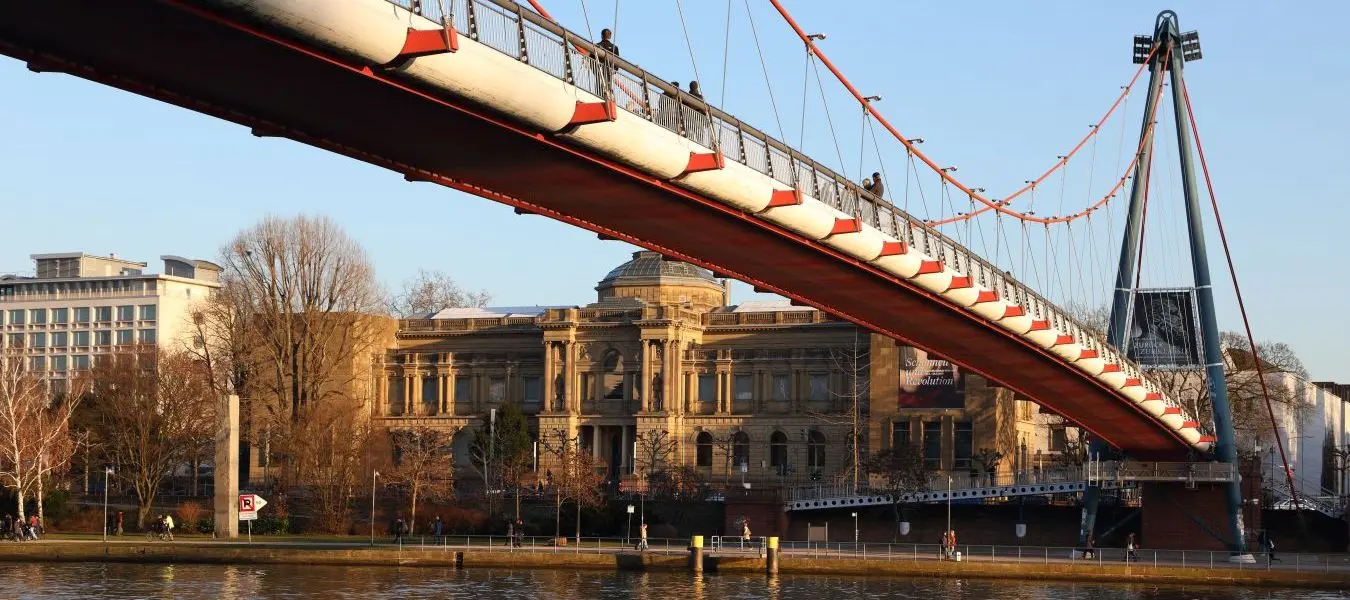
Frankfurt’s Museumsufer is one of Germany’s most significant museum districts. Numerous internationally renowned cultural institutions are located along the Main River. Particularly well-known is the Städel Museum, whose collection spans some 700 years of European art history—from the Renaissance through the Baroque to the present.
The German Film Institute & Film Museum, the Liebieghaus, and the Museum of Applied Arts also shape the cultural scene. The combination of significant collections, historic architecture, and the immediate riverside location makes the Museumsufer a special experience. Between museum visits, the green spaces on the southern bank of the Main invite visitors to take walks with views of the skyline.
- Highlight: The Städel Museum with its extensive collection of European art.
- Special feature: A diverse range of museums covering various disciplines in the immediate vicinity.
- Insider tip: After visiting the museum, take a stroll along the banks of the Main in Sachsenhausen. The view of the skyscrapers is particularly impressive in the evening light.
📍 Address: Städel Museum, Schaumainkai 63, 60596 Frankfurt am Main
🕐 Opening hours: Vary by museum.
💶 Admission: Free along the banks of the Main; most museums charge an admission fee.
🌐 Website: www.staedelmuseum.de
7. Eiserner Steg – Frankfurt’s Most Famous Pedestrian Bridge
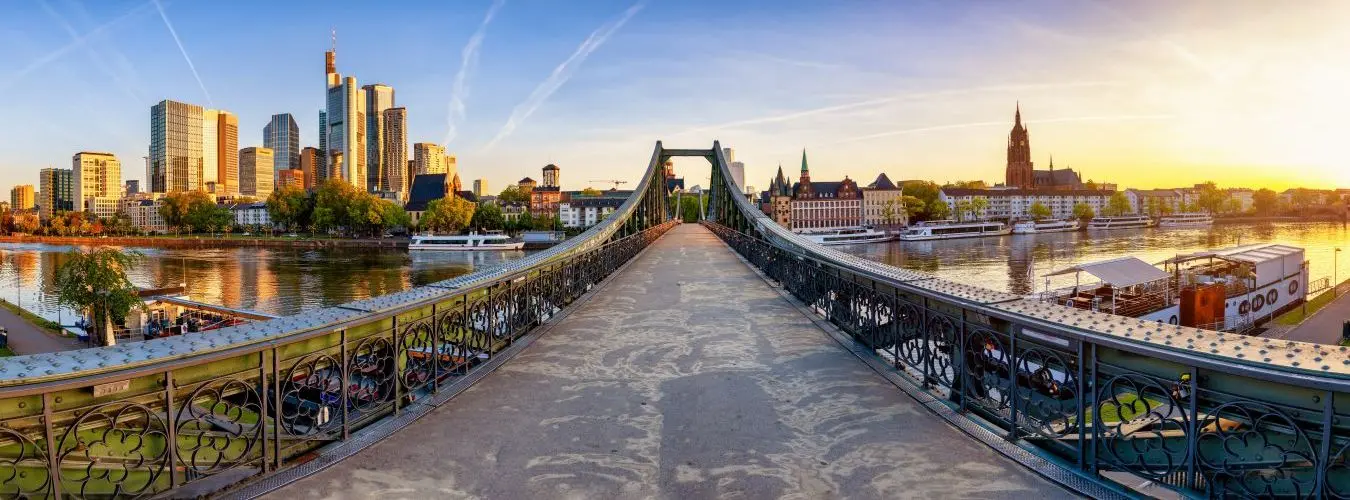
The Eiserner Steg has connected downtown Frankfurt with Sachsenhausen since the 19th century and is one of the city’s most popular photo spots city. The original bridge opened in 1869 and was later modified or rebuilt several times. Today, it is best known for its striking steel structure and unobstructed view of the skyline.
From the bridge, you can enjoy a particularly good view of the skyscrapers in the banking district, the Main River, and the riverside promenades. Numerous “love locks” on the railings attest to the popularity of the spot. Sachsenhausen begins on the southern bank of the Main; its historic old town, with traditional apple wine taverns and winding alleys reveals a completely different side of Frankfurt.
- Highlight: Panoramic view of the Frankfurt skyline.
- Special feature: Historic pedestrian connection between downtown and Sachsenhausen.
- Insider tip: Take a photo of the skyline from the southern end of the bridge. From there, you’ll get a particularly distinctive view of the financial district.
📍 Address: Between Mainkai and Schaumainkai, Frankfurt am Main
🕐 Opening hours: Generally open to the public at any time.
💶 Admission: Free.
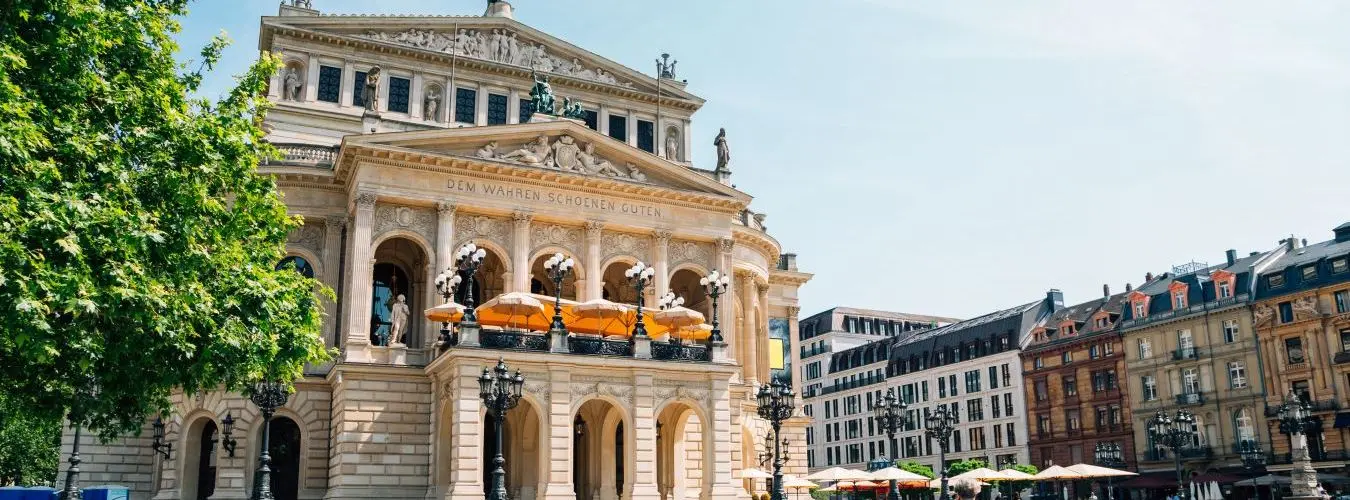
8. Alte Oper – Magnificent Architecture and Musical Tradition
The Alte Oper is one of Frankfurt’s most impressive historic buildings. Originally opened in 1880, the opera house was largely destroyed during World War II. After an extensive reconstruction phase, it reopened in 1981 as a concert and event venue. The stately Neorennaissance-style façade continues to give Opernplatz its distinctive character to this day.
Today, the Alte Oper hosts concerts by international artists, orchestral performances, and numerous other events. The Lucae Fountain in front of the building and the spacious plaza design make the building worth seeing even if you’re not attending a concert. In the immediate vicinity are Goethestraße with its exclusive shops and the green spaces of Frankfurt’s Wallanlagen.
- Architecture: A prestigious Neo-Renaissance building.
- Special feature: A major concert hall with an international cultural program.
- Insider tip: The Alte Oper is particularly atmospheric in the evening when the historic facade is illuminated.
📍 Address: Opernplatz 1, 60313 Frankfurt am Main
🕐 Opening hours: Varies depending on events and guided tours.
💶 Admission: Opernplatz is free; events require a fee.
🌐 Website: www.alteoper.de
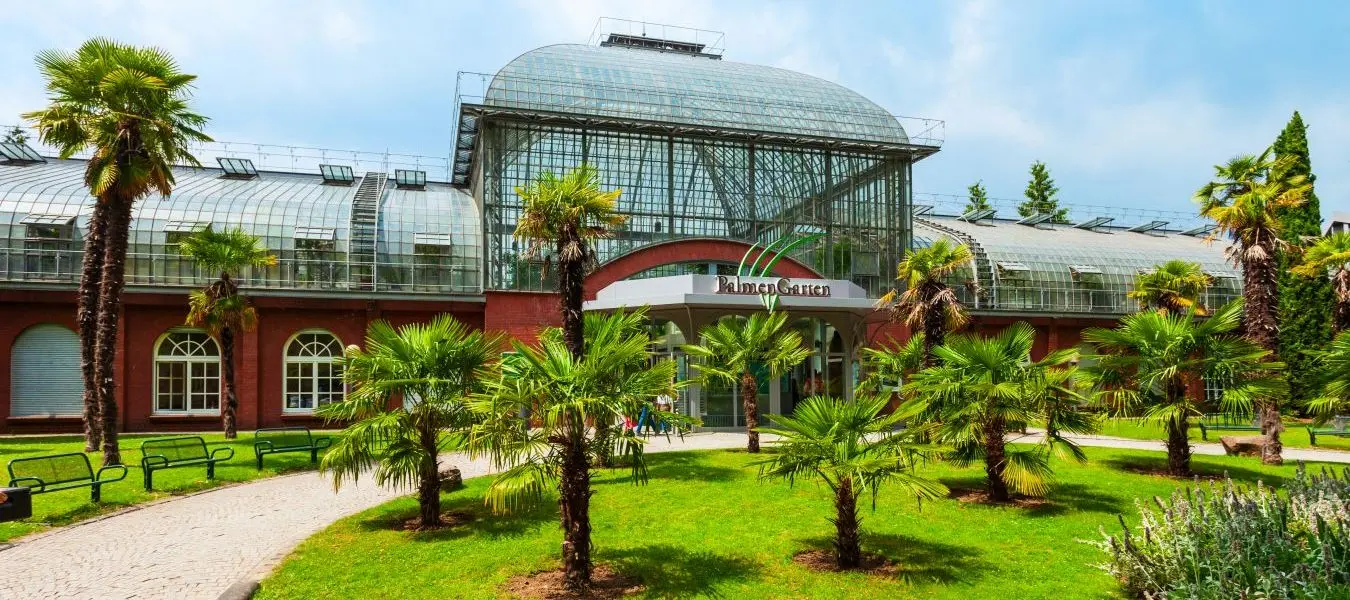
9. Palmengarten – a green oasis in the heart of Frankfurt
The Palmengarten is one of Germany’s most significant botanical gardens and offers an extraordinary variety of plants right in the heart of the city. Opened in 1871, the garden is located in the Westend district and spans approximately 22 hectares. Visitors can discover plants from a wide variety of climate zones here, ranging from tropical species to seasonal flower displays.
Particularly impressive are the historic palm house, the greenhouses, and the spacious gardens with water features and walking paths. The botanical highlights change throughout the year, making a visit worthwhile at different times of the year. The Palmengarten is equally suited for families, plant lovers, and people seeking a peaceful break from everyday city life.
- Highlight: Historic Palm House with tropical flora.
- Special feature: Botanical diversity and changing seasonal blooms.
- Insider tip: Combine your visit with a stroll through the neighboring Grüneburgpark, one of the most popular green spaces in the Westend.
📍 Address: Siesmayerstraße 61, 60323 Frankfurt am Main
🕐 Hours: Varies by season; check current hours in advance.
💶 Admission: Admission fee applies; check the website for current prices.
🌐 Website: www.palmengarten.de
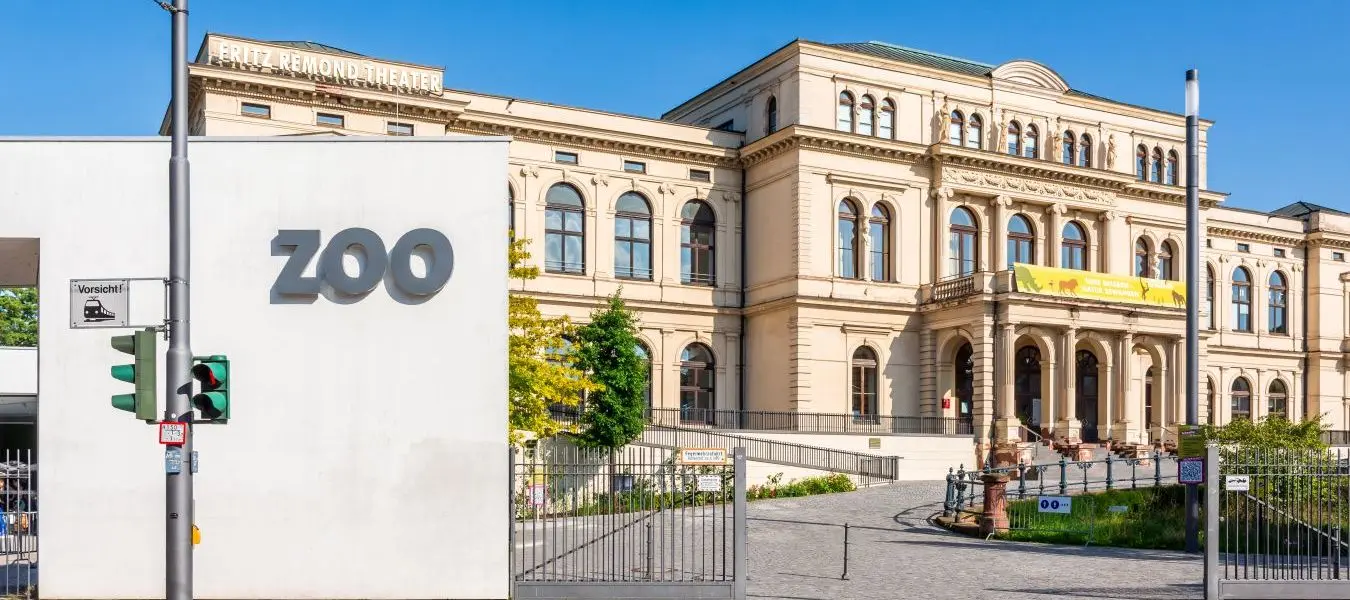
10. Frankfurt Zoo – A Special Destination for Families
Frankfurt Zoo is one of Germany’s most historic zoos and is a particularly popular destination for families. It was founded in 1858 and is now located in Frankfurt’s Ostend district, just a few minutes from downtown. The grounds are home to numerous animal species from a variety of habitats.
The Grzimek House is particularly well-known, where visitors can observe nocturnal animals. Other exhibits are dedicated to monkeys, predators, and various bird species, among others. In addition to providing an experience for visitors, the zoo also plays a role in species conservation and zoological education. Thanks to its central location, a visit to the zoo can easily be combined with other activities in Frankfurt.
- Highlight: The Grzimek House with its unique day-night reversal.
- Special feature: A zoo steeped in tradition with programs on wildlife and species conservation.
- Insider Tip: Allow plenty of time and check in advance for guided feeding sessions and special events.
📍 Address: Bernhard-Grzimek-Allee 1, 60316 Frankfurt am Main
🕐 Opening hours: Daily, with hours varying by season.
💶 Admission: Admission fee applies; current prices on the website.
🌐 Website: www.zoo-frankfurt.de
Top 10 Places to Visit in Frankfurt at a Glance
The ten attractions featured here showcase Frankfurt’s diversity, ranging from historic architecture to culture and nature experiences. The following overview will help you plan your Frankfurt sightseeing route.
| Attraction | Category | Location | Admission |
|---|---|---|---|
| Römerberg | Historic Square | Old Town | Free |
| New Old Town | Architecture | Old Town | Free |
| Imperial Cathedral | Church | Old Town | Tower (admission fee required) |
| Main Tower | Viewpoint | Financial District | Admission Fee |
| St. Paul’s Church | History | Old Town | Free |
| Museum Embankment | Culture | Sachsenhausen | Museums with admission fees |
| Eiserner Steg | Bridge | Main Riverbank | Free |
| Alte Oper | Culture | Downtown | Paid Events |
| Palmengarten | Nature | Westend | Admission Fee |
| Frankfurt Zoo | Family Fun | Ostend | Admission Fee |
Frequently Asked Questions About Frankfurt am Main
When planning a Frankfurt sightseeing trip, the most important factors to consider are which sights to see, how much time you’ll need, and how to get there. The following answers provide a quick overview.
What are the must-see places to visit in Frankfurt?
Among the most important sights are the Römerberg, the New Old Town, the Imperial Cathedral, St. Paul’s Church, and the Frankfurt skyline. A walk across the Eiserner Steg to the Museumsufer is also highly recommended. These destinations give a good impression of both the historic and modern sides of Frankfurt.
How much time should you plan for sightseeing in Frankfurt?
A well-planned day is sufficient for the main attractions in the city center. If you’d also like to visit museums, the Palmengarten, or the zoo, you should plan on at least two days. Three days are ideal for a relaxed stay that includes excursions to other parts of the city.
Can you reach Frankfurt’s sights on foot?
Many central sights can be easily explored on foot. Römerberg, the Imperial Cathedral, St. Paul’s Church, the Eiserner Steg, and the Museumsufer are relatively close to one another. For destinations further away, such as the Palmengarten and the zoo, we recommend using public transportation.
What is the most famous photo spot in Frankfurt?
The Frankfurt skyline is one of the city’s most famous photo spots. Photos taken from the Eiserner Steg and the southern bank of the Main are particularly popular. If you’d like to photograph the city from above, the observation deck of the Main Tower offers an impressive view.
Is Frankfurt suitable for families with children?
Frankfurt offers numerous family-friendly attractions. The zoo, the Palmengarten, and various museums with activities for children are especially recommended. In addition, there are spacious green spaces, playgrounds, and walking paths along the Main River.
What is the best time of year to visit Frankfurt?
Frankfurt is generally worth visiting year-round. In spring and summer, the parks and the banks of the Main River are perfect for outdoor activities, while fall is especially well-suited for museum visits. During the Advent season, the Christmas market around the Römerberg is one of the city’s most famous events.
Which sights in Frankfurt are free?
Attractions that are free to visit include the Römerberg, the public alleys of the New Old Town, and the Eiserne Steg. Strolling along the Museumsufer and enjoying the view of the skyline from the banks of the Main are also free of charge. For historic buildings, admission may be required for certain interior rooms or special events.
How do I get to Frankfurt am Main?
Frankfurt am Main is one of Germany’s most important transportation hubs and is easily accessible by car, train, and public transportation. Its central location in the Rhine-Main region also makes the city an attractive starting point for excursions to Wiesbaden, Mainz, Darmstadt, or the Taunus Mountains.
By Car
- Frankfurt is connected to the national highway network via the A3, A5, and A66 highways.
- For visitors to the city center, there are various parking garages available, for example, around the Hauptwache, the Konstablerwache, and the Römer.
- Due to downtown traffic, it is advisable to check parking options and access regulations in advance.
By Train
- Frankfurt Central Station is one of Germany’s most important long-distance rail stations and is served by numerous ICE and IC trains.
- From the main station, there are S-Bahn connections toward Hauptwache and Konstablerwache.
- The long-distance train station at Frankfurt Airport also offers convenient travel from many regions.
By bus, subway, and streetcar
- Frankfurt’s public transit network includes S-Bahn trains, subways, streetcars, and buses.
- The Dom/Römer, Hauptwache, and Willy-Brandt-Platz stops are good starting points for exploring the city center.
- For longer stays, day passes or special offers from the Rhine-Main Transport Association may be a good option.
Is Frankfurt am Main a good place to live?
Frankfurt am Main is not only an attractive travel destination but also a diverse place to live, with an international business community, a well-developed infrastructure, and a variety of residential neighborhoods. The combination of career opportunities, cultural diversity, and good public transportation connections makes the city appealing to a wide range of people.
- Quality of Life: Neighborhoods such as Sachsenhausen, Westend, Nordend, and Bornheim combine urban life with distinctive local character, dining options, and green spaces.
- Economy: The European Central Bank, numerous financial firms, international corporations, and service providers shape the job market.
- Transportation: The international airport, the main train station, and the regional public transit network ensure high mobility.
- Family-Friendliness: Schools, daycare centers, sports clubs, parks, and recreational activities offer a variety of opportunities for families.
- Real Estate Market: Frankfurt is one of Germany’s most sought-after real estate locations. However, purchase prices and rent levels vary considerably depending on the neighborhood, micro-location, condition, and amenities of the property.
While high-end condominiums and prestigious historic homes, other neighborhoods offer a broader spectrum of different housing options. Anyone interested in the Frankfurt real estate market will find a selection at VON POLL IMMOBILIEN current real estate listings in Frankfurt am Main.
Whether a property is suitable as a primary residence or an investment depends not only on its location but also on numerous other factors. A personalized assessment by an experienced real estate agent in Frankfurt am Main can help you better understand the unique characteristics of individual neighborhoods and the current market conditions.
Conclusion: Why a visit—and a life—in Frankfurt is worthwhile
Frankfurt am Main uniquely combines history, culture, international business, and urban lifestyle in a unique way. The best places to visit in Frankfurt range from the medieval Römerberg to the historic Imperial Cathedral, the modern skyline, and the green spaces of the Palmengarten. Visitors to the city will discover far more than just skyscrapers and banks: Frankfurt offers vibrant neighborhoods, cultural diversity, and numerous places to relax and enjoy. These qualities make the Main metropolis appealing not only to visitors but also to people who want to settle down and make a home here for the long term.

About the Author: Rouven Hopp
Rouven Hopp has been with VON POLL IMMOBILIEN since 2019 and was born in Frankfurt. Working out of the company’s Frankfurt headquarters, he deals with the Frankfurt real estate market on a daily basis and knows the city inside and out—from Westend to Sachsenhausen to Bornheim —and knows exactly what owners, buyers, and visitors are looking for here.
VON POLL IMMOBILIEN: Your Real Estate Agent in Frankfurt am Main
Frankfurt offers an extraordinary variety of properties and neighborhoods—from prestigious apartments in historic buildings in the Westend to modern condos in the Europaviertel and family-friendly residential areas in Sachsenhausen and other districts. The team at VON POLL IMMOBILIEN Frankfurt am Main supports owners and prospective buyers in selling and purchasing real estate, as well as in obtaining well-founded property valuations. The focus is on the individual characteristics of the property and the unique features of its micro-location.
Current real estate listings in Frankfurt am Main
Visit us at our office VON POLL IMMOBILIEN Frankfurt am Main. Here, we support you with a wide range of premium services related to your property.
| Address |
Eschersheimer Landstraße 537
60431
Frankfurt am Main
|
| Tel. | +49 69 - 95 11 79 0 |
| Fax | +49 69 - 95 11 79 11 |
| [email protected] |
Eschersheimer Landstraße 537
60431 Frankfurt am Main
| Tel. | +49 69 - 95 11 79 0 |
| Fax | +49 69 - 95 11 79 11 |
| [email protected] |